
Volume One
Fall 2025
The Impact of Capitalism on Art
NuEpoca is a journal of literature and art that platforms creatives making art in the midst of their everyday lives. Everyone deserves to make art, and share it with others. NuEpoca is just one piece of the puzzle towards creating a non-elitist approach to celebrating artists.
Accessibility in Art
NuEpoca does not have any submission fees and does not require contributors to buy issues/subscribe in order to submit. We also do not accept money for paid promotion. We prefer to advocate for artists we genuinely believe in and enjoy. This creates an even playing field in terms of submitting.
Submit Writing, Art and More

Support Us
We sell physical copies of the journal for those interested in financially supporting NuEpoca. We also accept donations.
Other ways to support us without spending money is to simply visit our website and socials often! This lets us know that people care about our mission.
More From Us
Morally Grey Characters
⸻⸻⸻⸻⸻⸻⸻⸻⸻⸻⸻⸻⸻⸻⸻⸻⸻⸻⸻⸻⸻⸻⸻
by Kye Hamilton
Today, I finished John Williams’s novel Stoner, and I must say that I have seldom been so bereaved by a work of literature. Williams is ruinously effective at creating characters that feel real, and not mere words on a page. Over the course of its short 278 pages, I had truly lived another person’s life experiencing all the joy, sorrow, and disappointment that Stoner had to offer.
John Williams' Stoner: A Literary Classic, and also Morally Grey
⸻⸻⸻⸻⸻⸻⸻⸻⸻⸻⸻⸻⸻⸻⸻⸻⸻⸻⸻⸻⸻⸻⸻
William Stoner, the novel’s protagonist, is far from a perfect, heroic, or even “good” character by all metrics. His flaws are displayed throughout the novel, particularly concerning his relationship with two women: his wife, who he unhappily married at a young age, and his colleague, a much younger woman who he has an affair with. To keep it brief, both relationships are unethical on all counts and would lead me to condemn any real-life person. Stoner, however, exists nowhere but in the pages of Williams’s novel, and I found myself empathizing with him a great deal, despite my personal reservations.

My reservations reminded me of a complicated internal dialogue that I’ve had over the past year regarding the overall judgement a reader should have over a fictional person and whether these judgements should reflect those of real people.
Authors walk a tightrope of likability when it comes to realistic and therefore flawed characters. On one side, the character can be too perfect to be related to, while on the other they are so flawed that they are simply hated. Characters, at least when poorly written, can often fall on two sides of the spectrum, but well crafted ones are somewhere in the middle. We see the flaws in a character as a reflection of ourselves—a component of what makes us human, but also, can be a point of tension for some readers.
When a character is well-written, the verisimilitude of the story directs you to feel as though they were a person that actually exists/existed. A well written character is, almost by nature, imperfect, just as all real people are imperfect, regretful, and constantly growing. It is something at the core of what makes us human, and fictitious people should reflect our flawed nature when under the pen of a talented author.
By instinct, we feel as though we should judge their character by the same values that we use when examining the life of a real person. For example, if a person commits an act of premeditated murder, we as a society agree that they should be condemned and punished. However, there are countless beloved leading characters that are criminals, thieves, murderers, or worse, and the reader is still left empathizing with them.
Harkening back to William Stoner, we can see that he, as a character, fits this notion very well. He has many things about him that we value in people. He is an intelligent, kind, and well-intentioned man who undergoes a great deal of hardship, and it's natural for readers to want him to find happiness as we peer into his life through the page. However, when his methods of finding happiness are by cheating on his wife with a much younger colleague who was once one of his students, it is equally as natural to condemn his behavior.
In spite of my typical standpoints on cheating, age gaps, and Title IX violations, I found myself feeling for Stoner’s relationship, and heartbroken at its tragic and inevitable ending. I’m certain most other readers felt the same way. Despite their love being taboo and unethical by nature, it is still a loving relationship and I applaud Willliams’s writing for being strong enough to make that love shine through.
A Morally Grey World Creates Morally Grey People
⸻⸻⸻⸻⸻⸻⸻⸻⸻⸻⸻⸻⸻⸻⸻⸻⸻⸻⸻⸻⸻⸻⸻
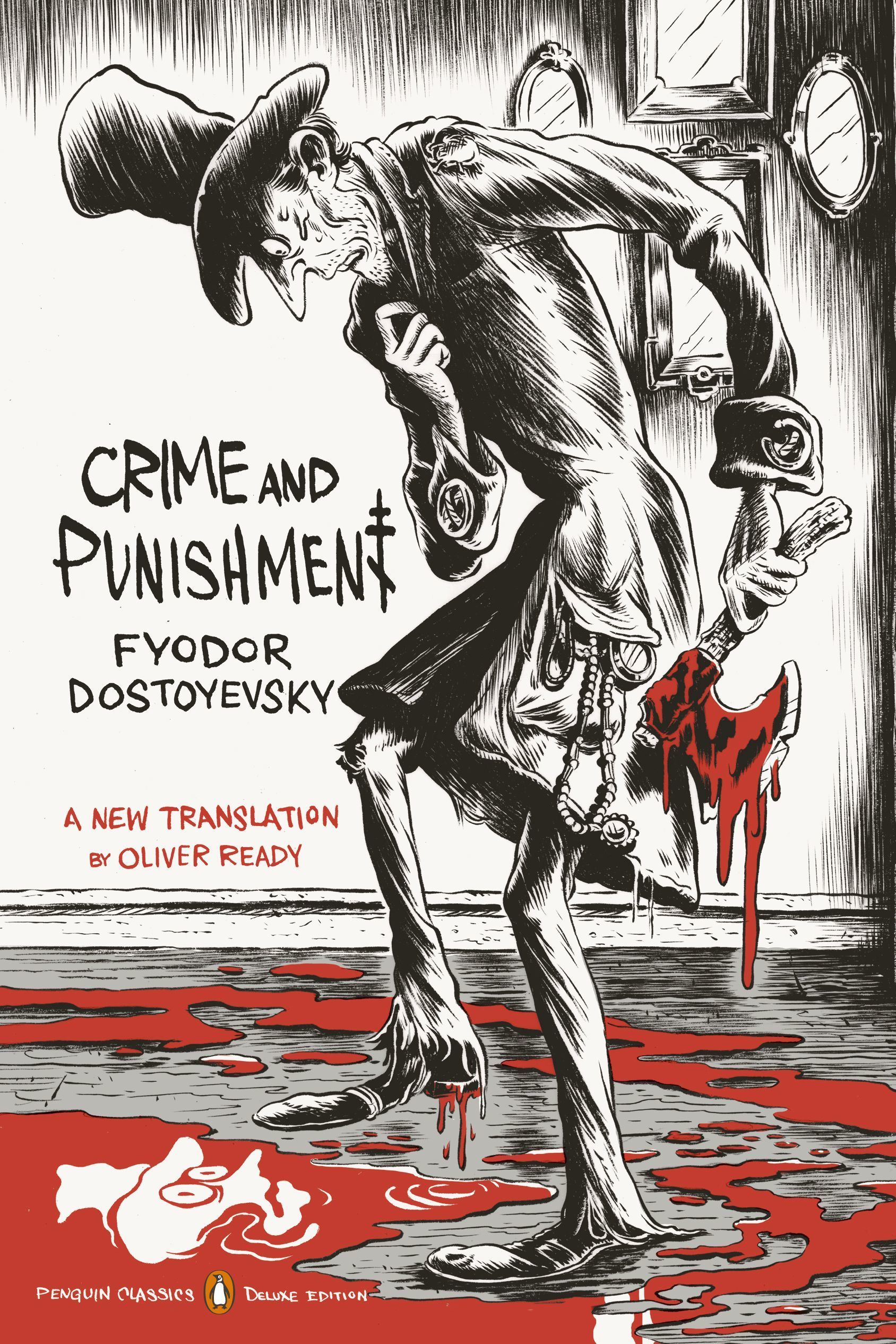
Raskolnikov from Fyoder Dostoyevsky’s Crime and Punishment is another great example: instead of the narrative being from the perspective of a murderer’s pursuer, the novel is under the viewpoint of the murderer himself. Raskolnikov meticulously plans the cold-blooded murder of a woman for money, and believes that “great men” are above the law when it comes to crimes such as murder. Despite his repulsive acts, the audience is left empathizing, and even rooting for Raskolinikov’s success, not because he is a good person, but due to the masterful strength of Dostoyevsky as a writer.
As readers, we get an inside look into characters that we would otherwise not get out of people we hear about on the news, or even know very closely. We know the “why” of when someone commits an act of evil and the complex notions that led them to doing it. Raskolnikov may be a bad person, but he also exists in an imperfect society that left him destitute and without a means of escaping his poverty. Most wouldn’t commit murder to escape that poverty, but taking drastic measures in fiction signals to the less dramatic measures that many take everyday, making the logic behind Raskolnikov’s plan to murder strangely relatable. It is the string of systematic societal failure that ties modern readers to a centuries old morally grey character.
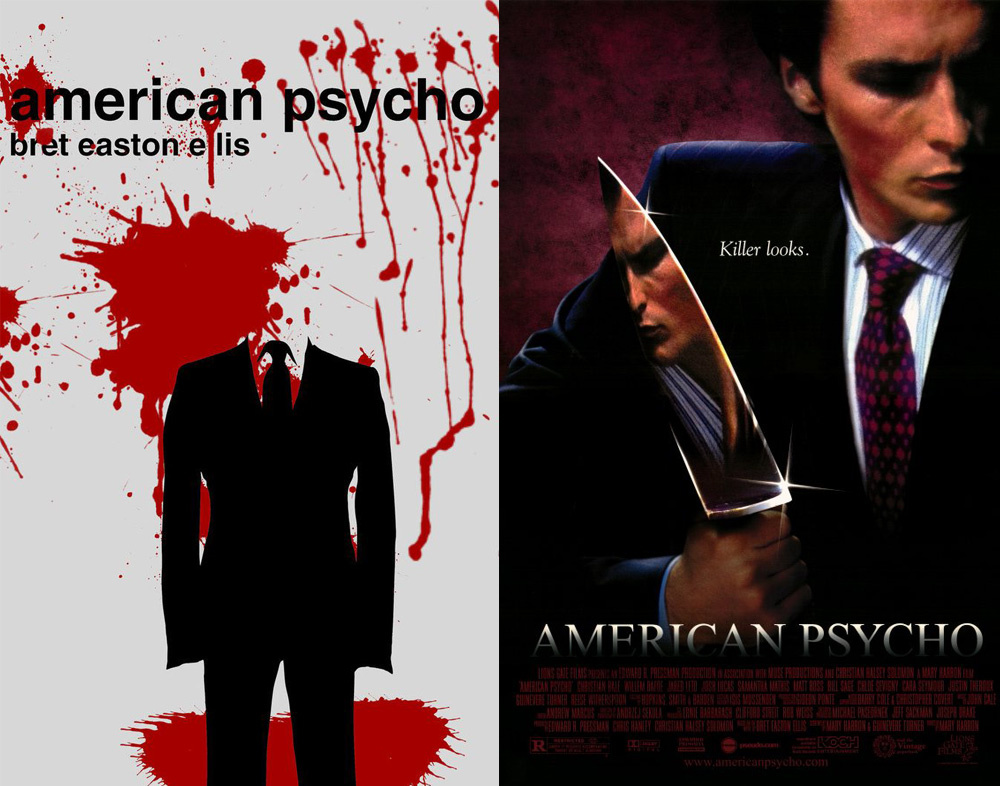
Of course, there is a level of empathy that goes beyond what the author intends. Not all readers have the literary intelligence to realize that depiction does not equal endorsement. Being fascinated with Patrick Bateman because of Brett Easton Ellis’s prose is one thing, but idolizing him as an aspirational figure is another.
However, on the flipside, some argue that the simple existence of very well written morally grey(or in the case of Patrick Bateman, straight up evil) characters is a negative influence on readers. The substance of this argument is contingent upon the author’s writing of a character being very strong, and therefore, continuing this logic implies that writing flawed characters in a flat, lazy way is the best way to explore human evil, which is an affront to the very nature of literary fiction. Additionally, literary misinterpretations have always and will always continue to exist. A very ill man once committed murder because of how much he idolized Holden Caulfield in Catcher In the Rye despite the fact that there is no murder in the novel nor is Holden meant to be idolized by any means. Holden is a deeply troubled and flawed teen, making him relatable to readers who are struggling with personal growth. Relatability does not indicate idolization – quite the opposite, actually. Precisely because a flawed character is relatable, they should not be idolized, and rather, they should be seen as a case study of the human condition.
Conclusion
⸻⸻⸻⸻⸻⸻⸻⸻⸻⸻⸻⸻⸻⸻⸻⸻⸻⸻⸻⸻⸻⸻⸻ However, should audiences (generally) feel bad for empathizing with questionable fictional people? In most cases, I don’t think so. Judgement should not be black or white, but of a grey that colors the entire world that we live in. Fiction is a space to explore topics that we otherwise could not in our material world, and that includes the minds of people we would never want to interact with on a personal level. Humans are social creatures, and it’s in our nature to feel for other people, fictional or not. I cried over the death of Stoner despite him being a deeply flawed, and also a completely made up person, and I wouldn’t label that as problematic, in fact, I’d go as far as to call it beautiful.
